Post driver with air-cooled 4-stroke petrol engine
- Secure checkout
- Shipping details
- Return policy


Product details
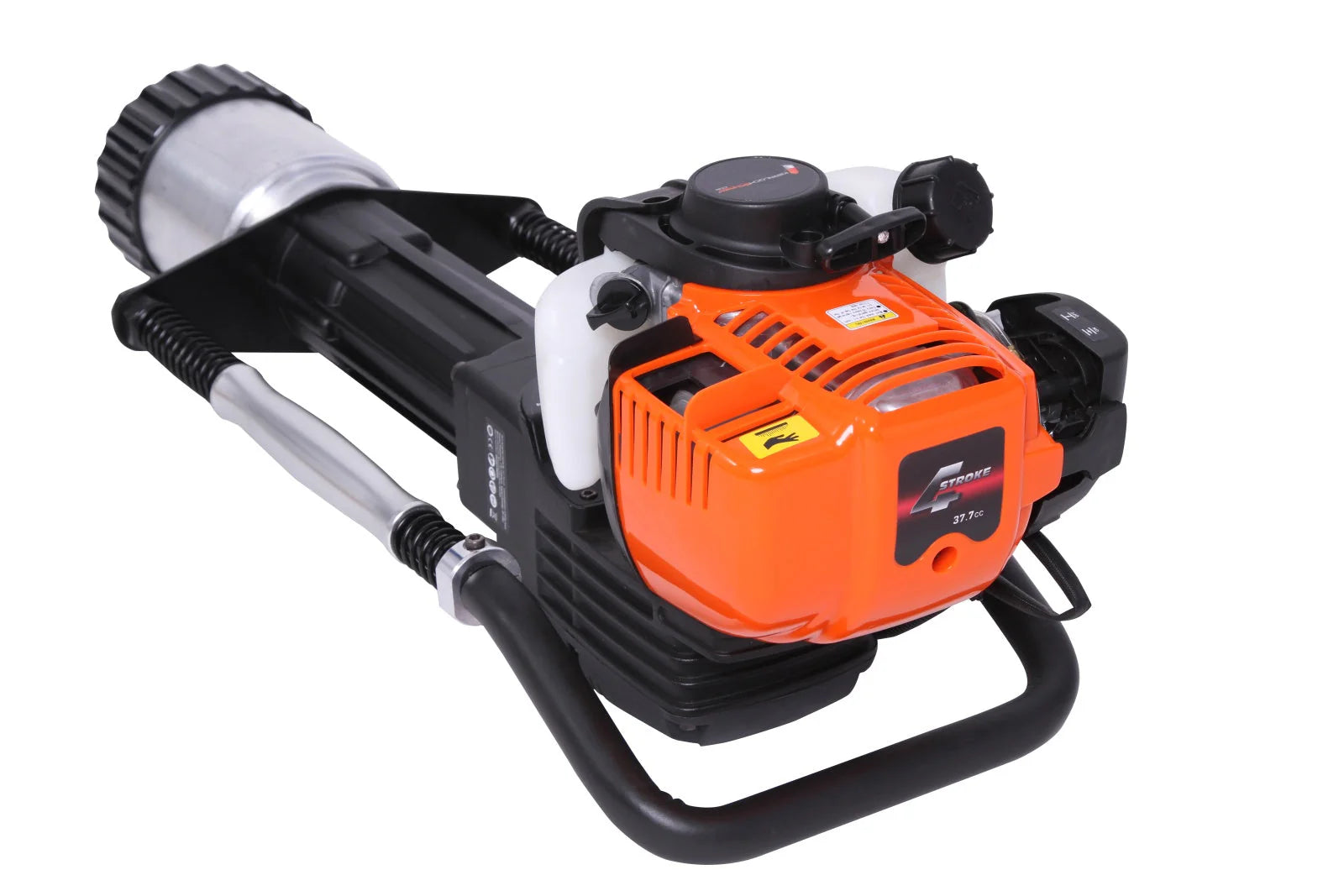
"Skippy" pile driver with air-cooled 4-stroke gasoline engine The "Skippy" ram is a high-performance and modern tool for quickly and easily driving wooden, metal or concrete piles up to 120 mm in diameter. It enables professional work on construction sites, in agriculture, in events and in many other applications. Its modern design, ergonomic construction and anti-vibration handles relieve the operator. All control elements of the machine are integrated into the combined switch of the operating handle, which facilitates handling and makes operation intuitive.
The ram drive motor, with a power of 1 kW / 1.36 HP, generates powerful striking energy of up to 55 joules at a maximum striking frequency of 1350 blows per minute. The engine can be started easily using a cable. The large fuel tank and low fuel consumption allow the machine to be used for longer without having to refill it. The integrated four-stroke engine offers several advantages over the often used two-stroke engines: quiet, low-emission operation as well as a longer service life and reduced maintenance. The cast aluminum gear case and the robust engine guarantee the stability and longevity of the machine.
The supplied accessories and tools, as well as the user manual, allow you to use the pile driver safely and without problems. The guarantee and after-sales service of Kernlochbohrer GmbH will allow you to enjoy your machine for a long time. Note regarding commissioning The machine is delivered by Kernlochbohrer GmbH filled with engine oil. As a precaution, the engine oil level should be checked before starting the engine for the first time! Instructions for driving piles with a ram Different ground conditions can influence the driving process and the stability of the driven piles. Some important aspects should be taken into account here.
Soil type The influence of soil type on the threshing process is considerable. Clay soils have higher resistance, while sandy soils are generally less resistant. Clay soils are characterized by high adhesion, which can lead to increased resistance during threshing. Soil moisture Soil moisture also plays an important role in the threshing process. Wet soil increases the strength of the pile, while dry soil provides less resistance. If the ground is too wet or muddy, it may be difficult to drive the pile, as this results in an increase in frictional resistance. Soil conditions at depth.
It is very important to consider the soil conditions at depth, as they can often be different from the soil layers on the surface. It is possible that the upper layers of soil are made up of loose materials such as sand, while underneath there may be solid clay or even rock. These differences can result in uneven driving and affect the stability of the pile. The water table level The water table level is another factor that influences the driving process. A high water table increases resistance during pile driving. The presence of water can also loosen the soil and lead to reduced stability of the driven pile.
The type and dimensions of the pile The influence of soil conditions also strongly depends on the type of pile and its dimensions. Different pile materials, such as wood, steel or concrete, each have different mechanical properties and therefore react differently to different ground conditions. To guarantee a capacity foroptimal load and stability, it is important to choose the right type of pile according to the ground conditions. The size of the pile also plays a role, as it influences the strength and load capacity. Study of the foundation soil.
A comprehensive soil investigation before driving is essential to assess the ground conditions and identify possible difficulties or risks. This study makes it possible to make an informed decision on the driving operation in order to guarantee optimal stability and longevity of the driven piles. Assessing ground conditions allows appropriate arrangements to be made to overcome potential problems, for example by using specific piling techniques, adapting the piling process or choosing suitable piling materials. A thorough ground investigation is an essential component of a successful piling operation and helps to identify potential problems at an early stage and find suitable solutions to ensure the stability and safety of the work.
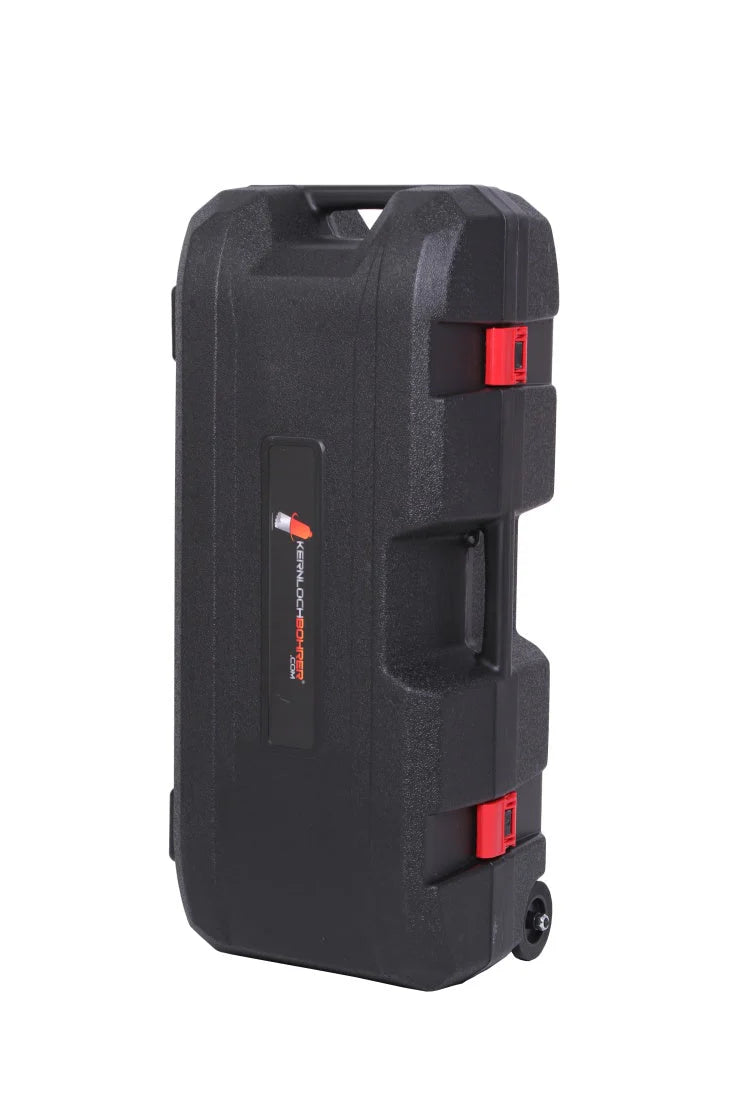
Included in delivery 1 wheeled case for storage 2 pile sleeves (Ø 70 mm and Ø 100 mm) Tool bag with tools Spare spark plug Gear grease User manual.